
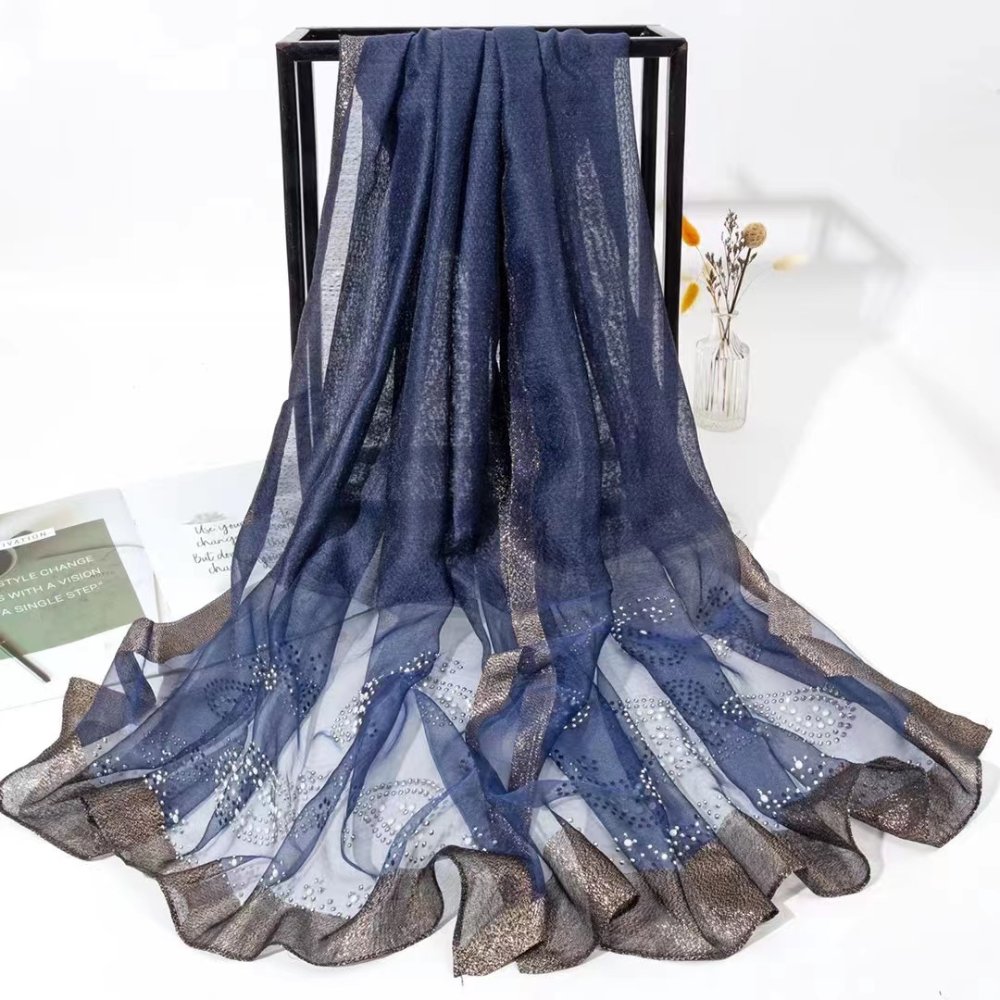
Rhinestone Scarf Packs: Protect the Decorated Face
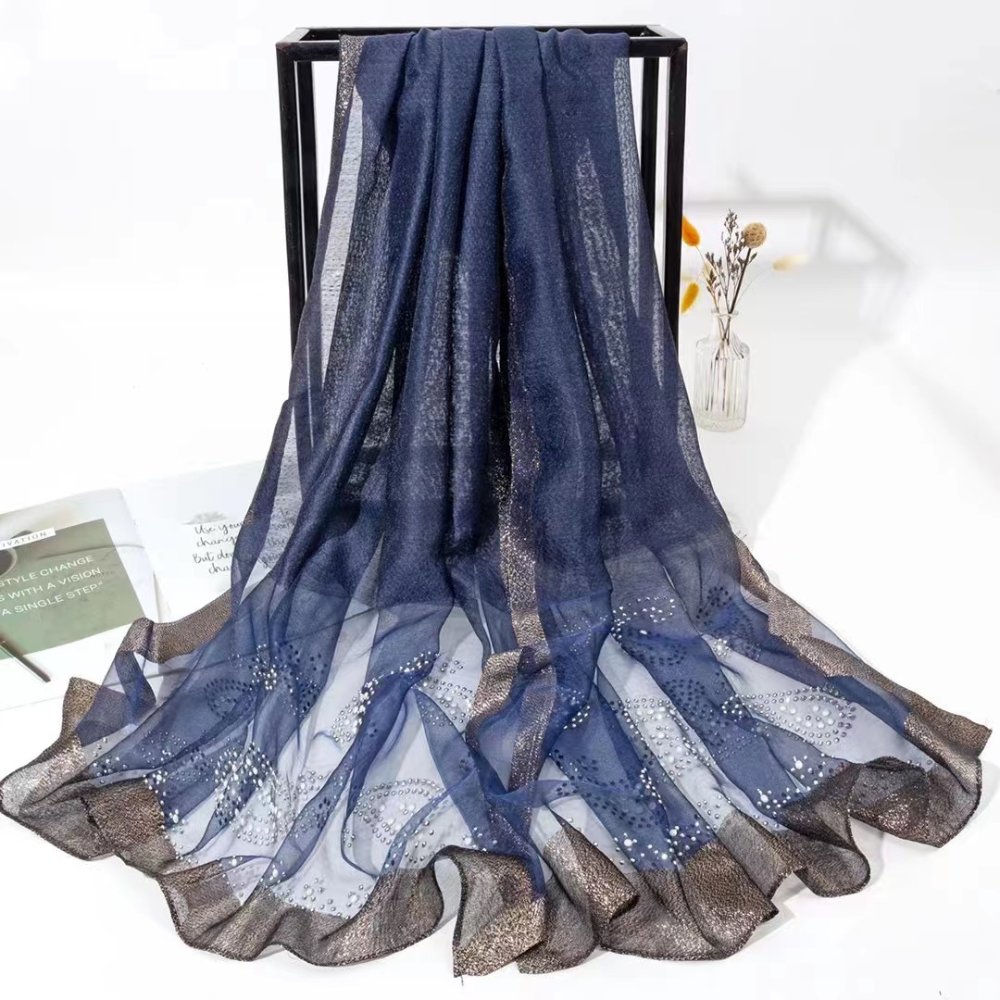
For rhinestone scarf packs, identify the decorated face and selected pattern before agreeing the fold and protective arrangement. Ask the supplier to show the proposed packed sample, then record its condition after an agreed unpacking review. Keep colour and pattern codes on the label, and avoid assuming attachment or transit performance from photographs.
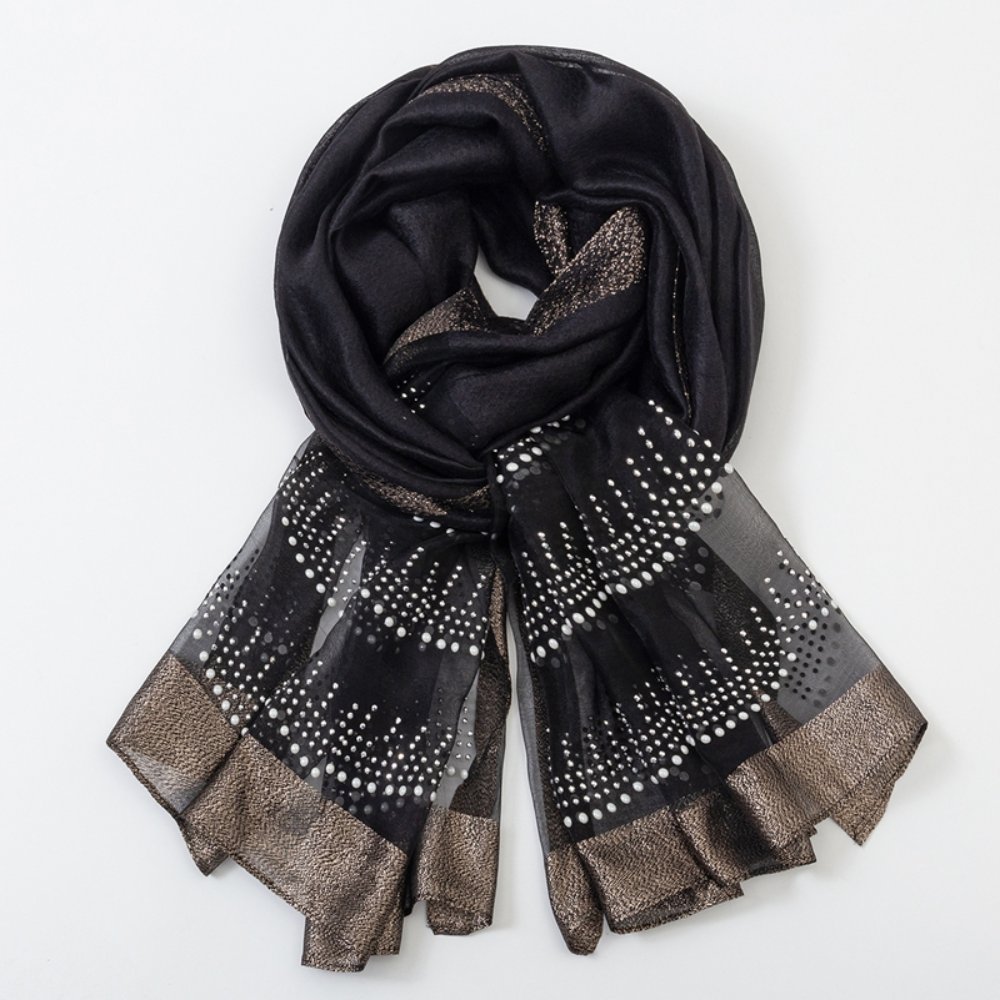
Wholesale rhinestone long scarves combine fabric with visible decorative areas that can become hidden once folded. A useful packing discussion therefore starts with the exact scarf and how its decorated face sits inside the pack. It should also give receiving teams enough information to identify the variant without treating a styled catalogue photograph as a complete packing specification.
Identify the pattern and colourway first
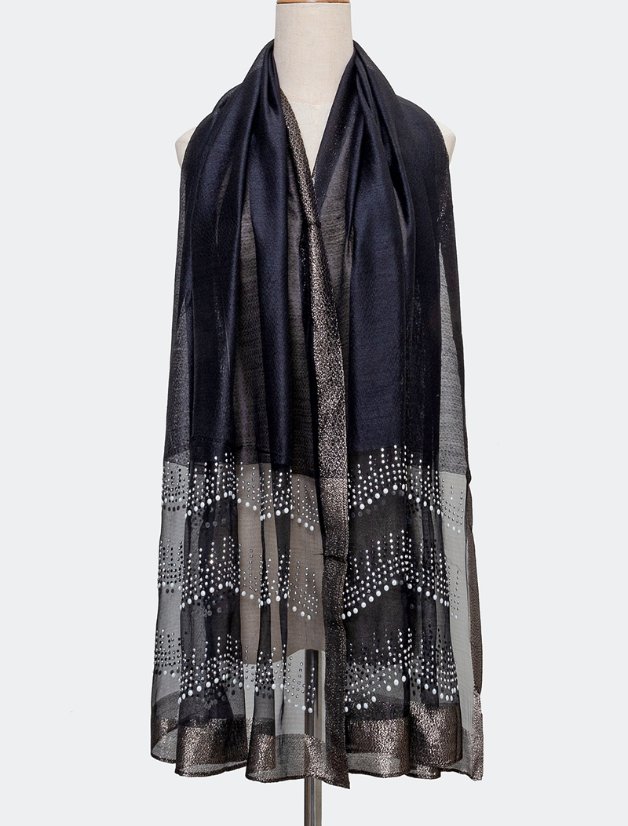
Yijia Tex lists a paisley rhinestone reference and a wave rhinestone reference. Keep their product links and selected colourways on separate assortment lines. Similar sparkle in a photograph does not make two decorative layouts interchangeable for packing or receiving.
Assign a buyer code to each agreed variant and retain a clear photograph of the decorated area. State whether the order supplies individual scarves or a defined mixed pack. If colours are mixed, provide the actual requested breakdown and ask for confirmation. A total quantity alone leaves the supplier to guess how the assortment should be divided.
- Pattern and colour code assigned to each selected scarf
- Decorated-face contact shown in the proposed fold
- Packed and unpacked sample photographs retained
- Unit, inner pack and carton labels agreed as needed
Review where the decorated face contacts the pack
Ask the supplier to demonstrate the proposed fold on the selected scarf. Identify which decorated areas contact fabric, packaging or another item. Record any proposed separating material rather than assuming it is already included. The aim is to agree a reviewable arrangement, not to prescribe an untested protective method from a front photograph.
Photograph the scarf before folding, the packed arrangement and the opened sample. Keep the same variant code in every view. If the supplier proposes a different fold or packaging material later, ask whether another sample review is needed. A packing decision for one decorative layout should not automatically be applied to a different pattern or size.
| Packing area | Record | Confirm before release |
|---|---|---|
| Identity | Product, colour and pattern code | Exact assortment quantities |
| Fold | Decorated-face contact points | Proposed separation or protection |
| Review | Actual unpacked sample condition | Open concerns and revised arrangement |
| Labels | Code, unit and artwork | Placement and contents description |
Agree an unpacking review with observable criteria
Specify how the sample will be opened and which appearance points will be recorded afterwards. Note the review conditions and retain photographs of the actual result. If there are visible marks, displaced decoration or other concerns, describe them precisely for the supplier to evaluate. Do not substitute an assurance that the pack is protective for a record of what was observed.
Keep this appearance review separate from attachment strength, cleaning performance or transit validation. Catalogue wording about rhinestone decoration does not establish the material of every decorative element or a tested bond. If a buyer requires a particular performance level, agree the method and supporting evidence with the supplier before approving the associated claim.
Make the label identify the merchandise
Propose a label containing the order reference, variant code, colour description and quantity unit. Confirm the level that needs identification: individual scarf, inner pack or outer carton. Use the same codes on the purchase order and contents list so the receiving team can reconcile the shipment without inventing informal names for similar patterns.
Provide any required buyer artwork or barcode instructions for review. Ask where labels will be attached and whether they remain readable after the proposed fold. Keep composition and care wording tied to the supplier’s confirmed product information. Do not copy a label statement from another scarf merely because the two products share a broad category.
Release the scarf and pack revisions together
Retain an accepted scarf sample with the packing proposal and a dated decision. List any open questions and requested changes before release. If the supplier changes the decoration, fabric or selected presentation, compare the new version explicitly. Keeping revisions together helps distinguish a product change from a simple adjustment to the way an unchanged item is packed.
Browse the current scarf catalogue to select references, then request an order-specific packaging response. Packing approval does not settle minimum quantity, price, shipping terms or delivery date. Those remain commercial questions. A clear record states what was packed and reviewed while leaving unverified performance and commercial points visible.
Frequently Asked Questions
Does an attractive packed sample prove transit performance?
No. It records the proposed arrangement and observed sample condition. Any required transit evaluation needs a separate agreed method and evidence.
Can one fold be used for every decorated scarf?
Confirm it for the selected layout, size and packaging. Changes can alter where the decorated face contacts other surfaces.
Should labels copy another scarf’s care statement?
Use information confirmed for the exact product. A shared category or similar photograph does not establish identical composition or care requirements.
Send your variant list and packing questions through Yijia Tex’s contact channel. Find related procurement guides in the supplier blog.