
Begonia Scarf RFQs: Request the Care-Label File
What care information should buyers request for an embroidered Begonia scarf? Ask the supplier for the manufacturer-defined care reference applicable to the exact offered scarf and, if a care label is proposed, its text or artwork file. Identify the file version, language and sample it represents. Keep unresolved wording visible rather than supplying a washing method, temperature or symbol from a different product.
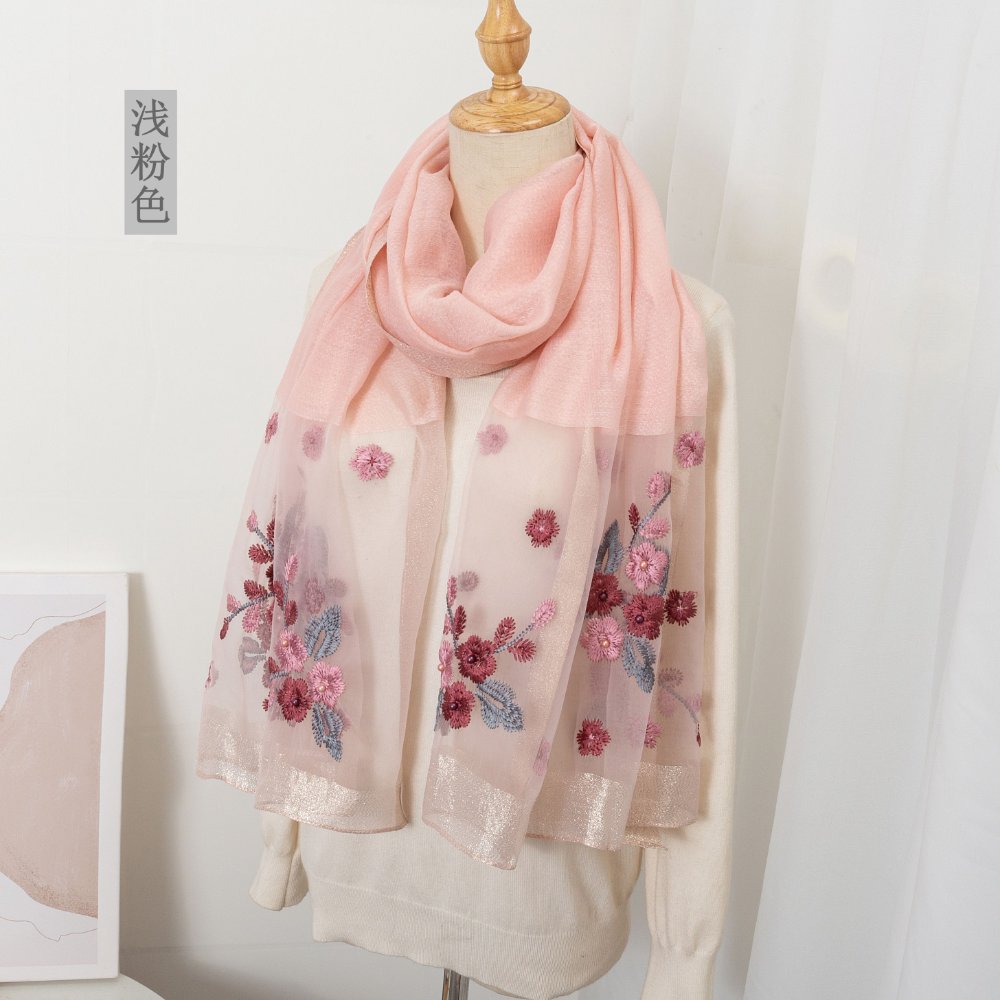
Begonia catalogue reference for identifying the offered scarf. The appearance does not supply a care instruction, fibre percentage or a confirmed care-label file.
Link the request to the actual scarf
Yijia Tex lists an Embroidered Begonia Flower Long Scarf and Shawl. The catalogue describes embroidery at both ends and metallic-yarn positioning around the scarf. Those details help identify the enquiry. They do not provide a finished-item care instruction or confirm that a particular label file is included in the offer.
When sourcing wholesale embroidered long scarves, attach the selected item reference to the request for care information. Ask which offered version the supplier response covers. An item name, sample reference and supplier reply should remain connected, especially when buyers are considering several embroidered styles in the same purchase enquiry.
Separate the care reference from label artwork
Begin by asking what care information the manufacturer provides for the offered finished item. Then ask whether the proposal includes a care label, a separate information document, both, or another stated arrangement. This lets the supplier describe the actual offer without a buyer treating the presence of a catalogue photo as evidence of a supplied label.
If label artwork is offered, request the file that represents the proposed wording. The artwork and the manufacturer care reference serve related purposes, but one should not silently replace the other. Ask the supplier to identify their relationship, and record any text that still needs clarification before a label proof is accepted.
Buying field
Requested supplier response
Offered item
The exact Begonia scarf version and the supplier or sample identity represented.
Care reference
The manufacturer-defined information supplied for that finished item.
Label supply scope
Whether a label or other care-information format is actually part of the proposal.
File identification
The file name or identifier, revision and issue reference used by the supplier.
Language version
The supplied wording and each proposed language version, kept separately identifiable.
Text and symbols
The actual supplied combination, with unanswered questions listed for confirmation.
Sample applicability
Which offered sample or variant the file represents and any stated limits.
Approval record
The accepted file revision, supplier clarification and matching proof reference.
Compare wording and symbols without inventing either
Request the actual file before comparing versions. Read the wording against the manufacturer reference and ask about differences in meaning, omitted content or an unexplained symbol. A buyer can identify a discrepancy without deciding what the missing instruction should be. Preserve the supplier answer with the relevant revision.
Where more than one language is proposed, give each version a clear identity. Ask whether the supplier has confirmed that the versions represent the same intended care information. A translated sales description is a different document from an agreed care instruction, and a marketing phrase should not become label wording merely because it is convenient to copy.
Separate Peony catalogue style. Its appearance does not establish that it uses the Begonia care file or that any care information transfers between the two offers.
Keep other embroidered styles outside the file scope
The accompanying Peony catalogue image shows a separate scarf style. It helps illustrate why a file needs a product identity: a similar embroidered appearance does not establish that the same care reference applies. Keep the Begonia enquiry linked to its own offered version until the supplier expressly identifies any shared applicability.
If a purchasing programme includes several scarves, ask for a simple applicability list. The list should name the products covered by each supplied file and distinguish any exceptions. Do not carry a care statement from another style into the Begonia file on the strength of a shared colour, display arrangement or general fabric description.
Match the proof to the supplied sample
When a label proof or information document is returned with a sample, record which item it accompanies. Compare its file identity with the version cited in the quotation or supplier reply. If the sample has no label, ask how the care information is proposed to be supplied rather than assuming a component is missing from an already agreed offer.
A label photograph can help establish what wording appears on that sample. Retain the readable view and its sample identity, while keeping the original supplied file available for comparison. If a discrepancy appears, request a corrected or explained version before turning that sample observation into the accepted production reference.
Related embroidery detail reference. A close photograph does not establish a washing method, temperature, symbol set or verified care performance.
Carry the accepted revision into the order record
Once the supplier has clarified the proposed care information, retain the accepted revision with the order acknowledgement and sample decision. Record any remaining question separately. This reduces the chance that an early draft is forwarded as the final artwork when another purchasing colleague or supplier contact joins the discussion.
If the offered scarf version or the proposed label wording changes, ask whether the existing care reference still applies. Request a revised applicability statement or file when needed. Keep the earlier version as history and make the currently accepted reference easy to identify; the file trail should explain the decision without requiring someone to reconstruct it from message fragments.
Identify the offered Begonia scarf and sample.
Request its manufacturer care reference and proposed label scope.
Track supplied wording, language and file revisions.
Retain the accepted reference with the order acknowledgement.
Buyer FAQ
Does the catalogue description supply a washing instruction?
It identifies and describes the product. Request the manufacturer care information for the actual offered finished item.
Should the buyer assume that a care label is included?
Ask the supplier to define the proposed supply scope, including any label or separate document.
Can the Peony style use the same care file as Begonia?
Only a supplier-confirmed applicability statement can establish that scope. Keep separate product references until clarified.
What should happen if a file and sample label differ?
Retain the exact versions and sample reference, ask the supplier to explain or correct the difference, and record the accepted revision.
Use the Begonia scarf product reference to identify your enquiry, request its care-information file and applicability statement, and consult the textile purchasing blog for related sourcing questions.
wholesale embroidered long scarvesB2B supplier sample record